

 TIG Self-Advocacy Guidance Google Site
 Wisconsin County Community on Transition (CCoT) Toolkit
 Resources
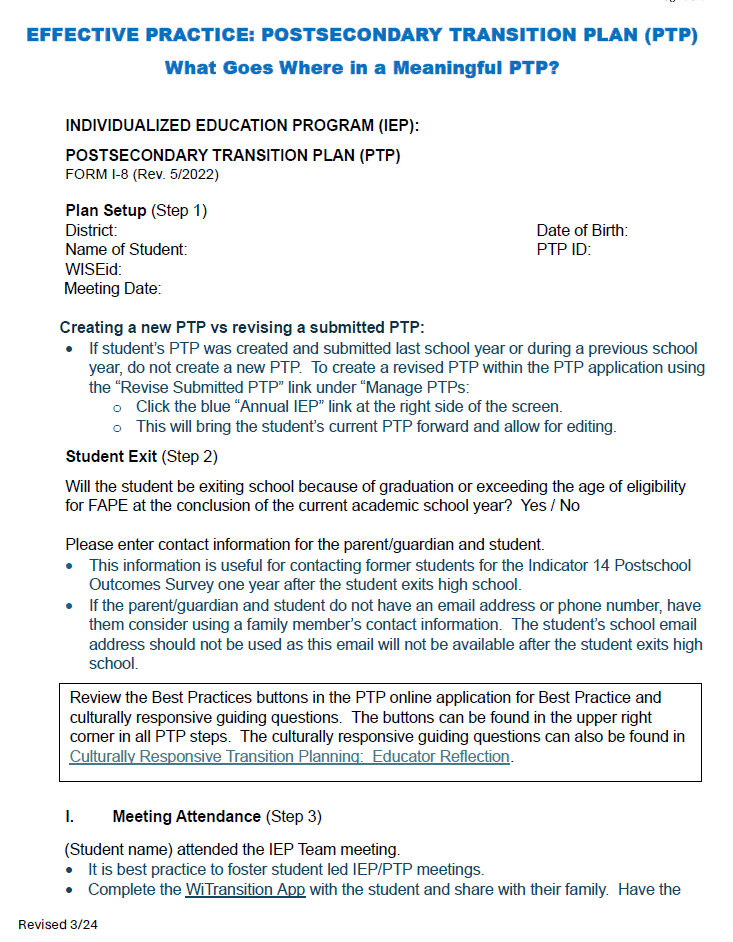
Effective Practice: Postsecondary Transition Plan (PTP)
Content Areas Best Practices, Indicator 13 - Postsecondary Transition Plan
Resource Type Document
This is a sample PTP using Effective Practice.
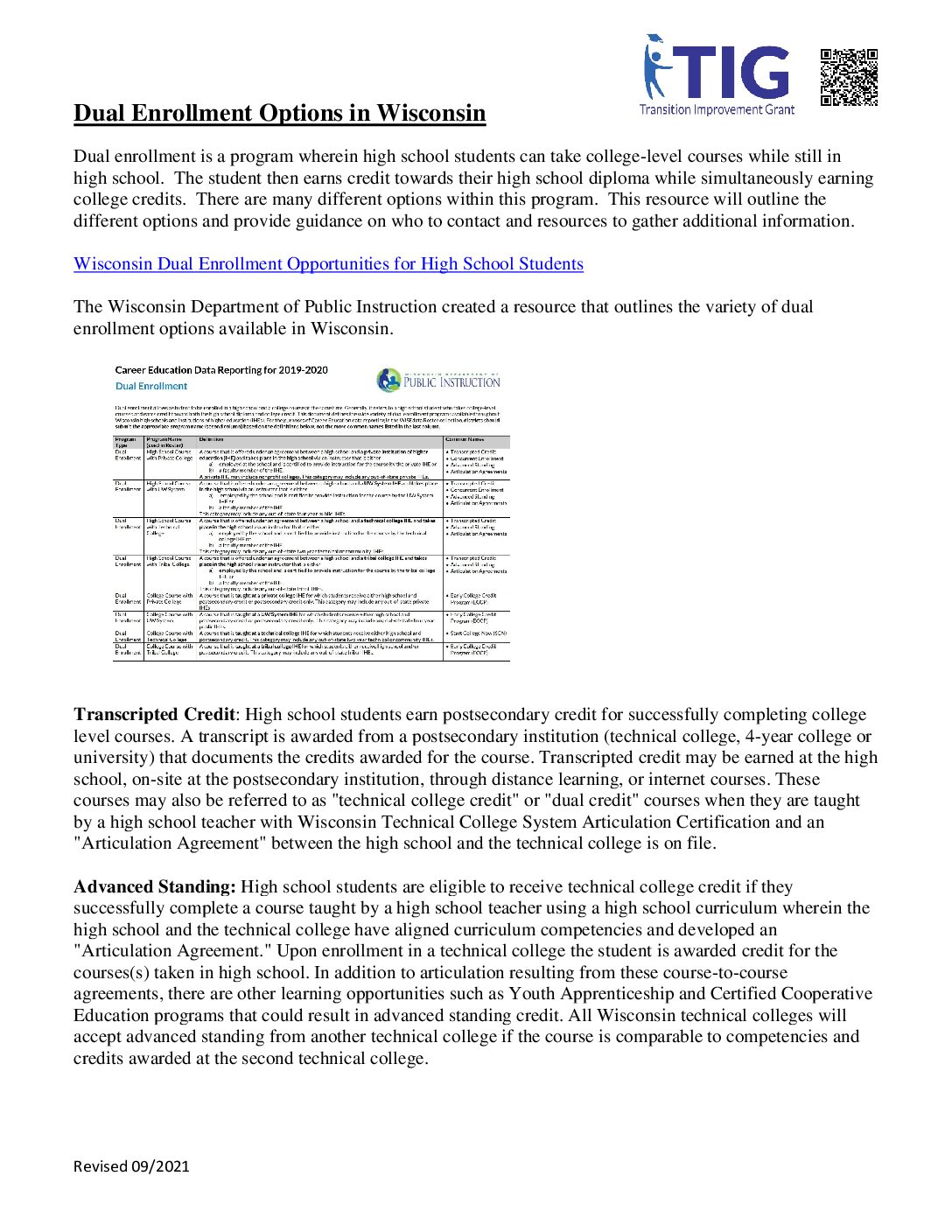
Dual Enrollment Options in Wisconsin
Content Areas Best Practices, Indicator 14 - Post School Outcomes
Resource Type Document
This resources outlines the different types of dual enrollment opportunities. It provides definitions, as well as valuable links and contacts.
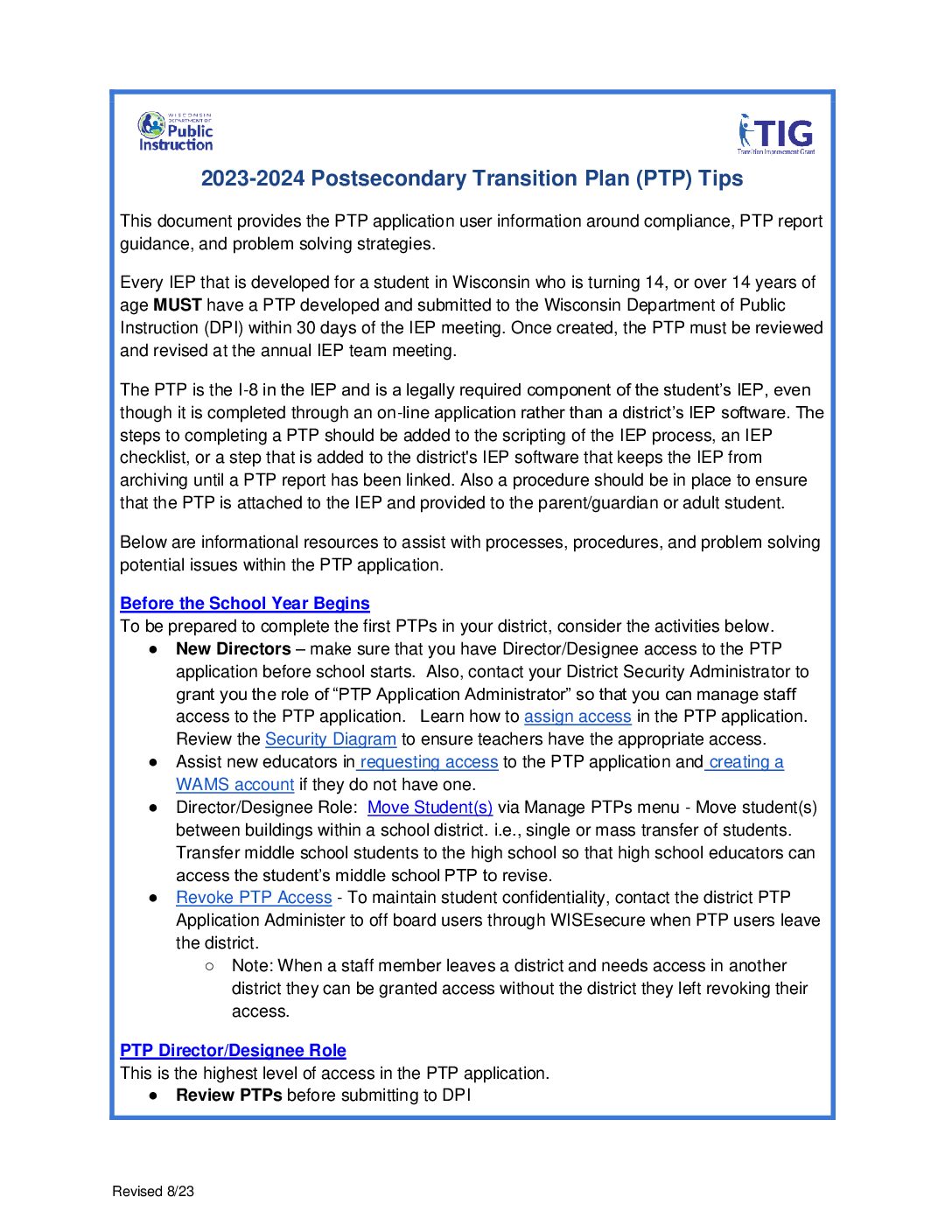
PTP: Tips
Content Areas Indicator 13 - Postsecondary Transition Plan
Resource Type Document
This TIP sheets gives helpful advice and links for PTP resources. Check out what's new!
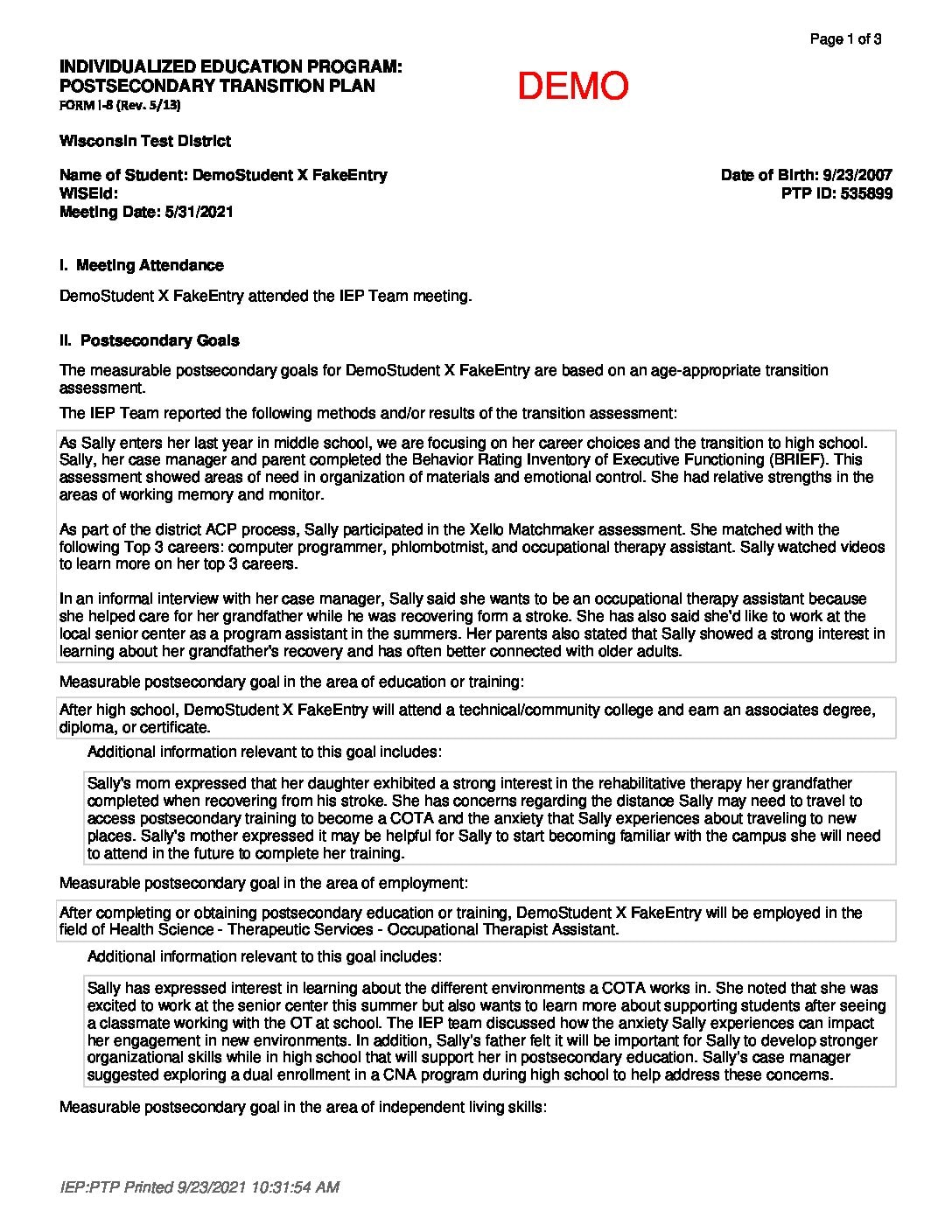
Sample PTP – Middle School – Sally
Content Areas Best Practices, Indicator 13 - Postsecondary Transition Plan
Resource Type Document
This is a best practice sample Middle School PTP for schools to review.
Recommended Agency Questions for Families
Content Areas County Communities on Transition (CCoT), Indicator 13 - Postsecondary Transition Plan
Resource Type Document
This document provides a list of questions for families to ask in general and of specific agencies.

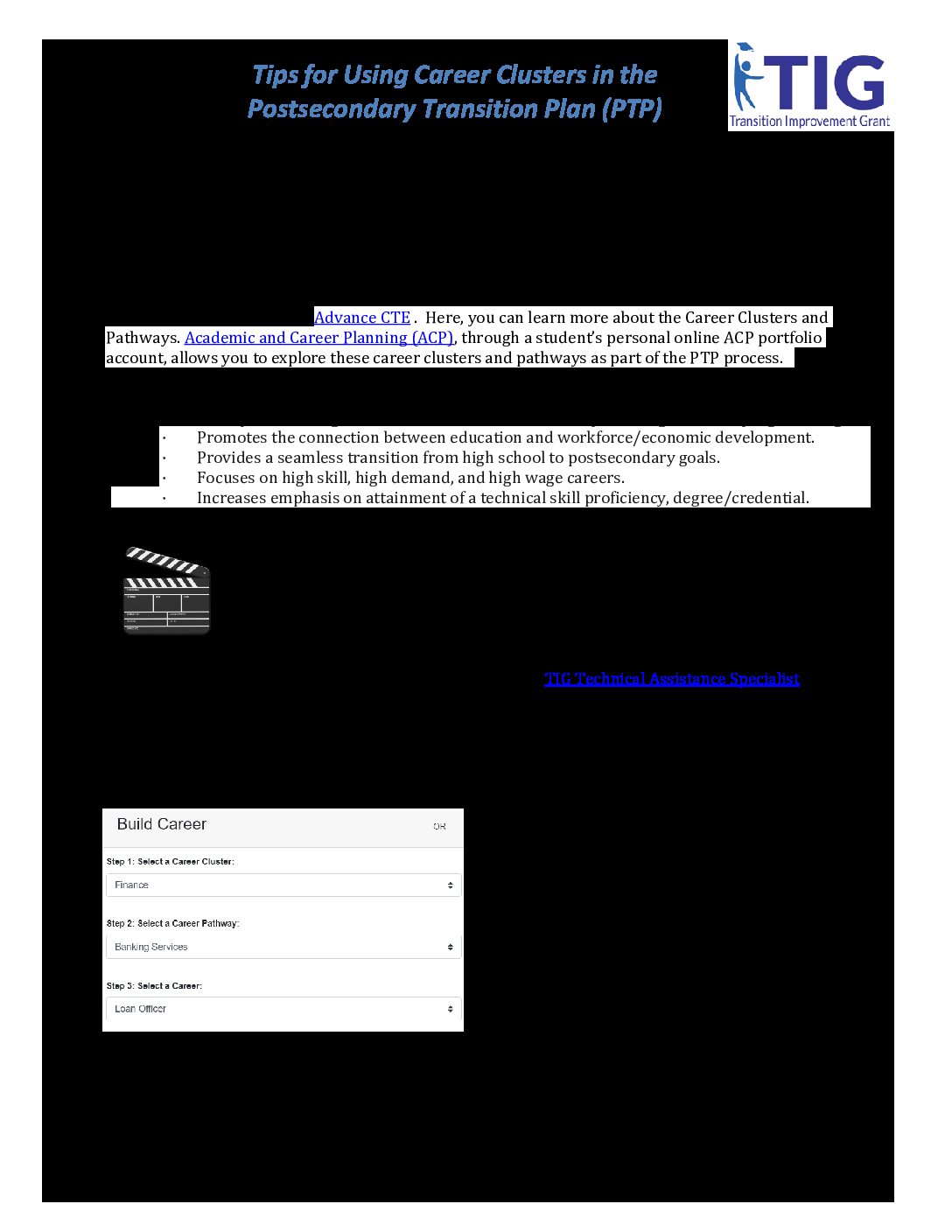
Tips for Using Career Clusters in the PTP
Content Areas Best Practices, Indicator 13 - Postsecondary Transition Plan
Resource Type Document
The Transition Improvement Grant has put together a tip sheet to assist specifically with utilizing Wisconsin Career Pathways and the Career Clusters within your PTP development. Check out this informative sheet to find examples of how to best align career clusters for transition planning!
Transition Planning for Families
Content Areas Indicator 13 - Postsecondary Transition Plan
Resource Type Document
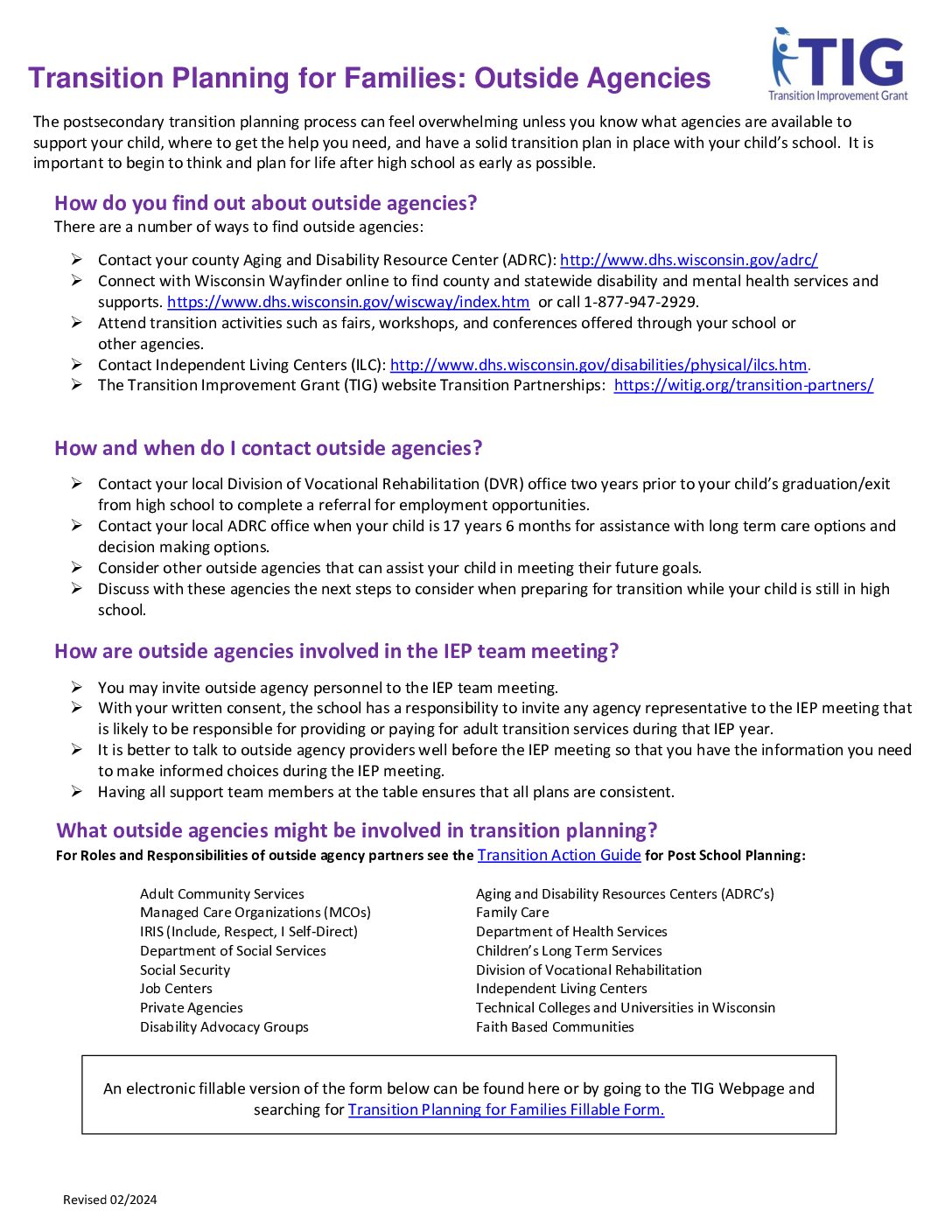
The postsecondary transition planning process can feel overwhelming unless you know what agencies are available to support your child, where to get the help you need, and have a solid transition plan in place with your child’s school. It is important to begin to think and plan for life after high school as early as possible.
Transition Activities as Students Advance Through High School
Content Areas Indicator 13 - Postsecondary Transition Plan
Resource Type Document
A detailed list of activities recommended for students with disabilities as they progress through high school. Along with recommendations regarding the age at which beginning the activity will be most beneficial to the student.

Guía para padres del Plan de Transición Post-secundaria (PTP) – Parent/Youth PTP Guide—SPANISH version
Content Areas Indicator 13 - Postsecondary Transition Plan
Resource Type Document
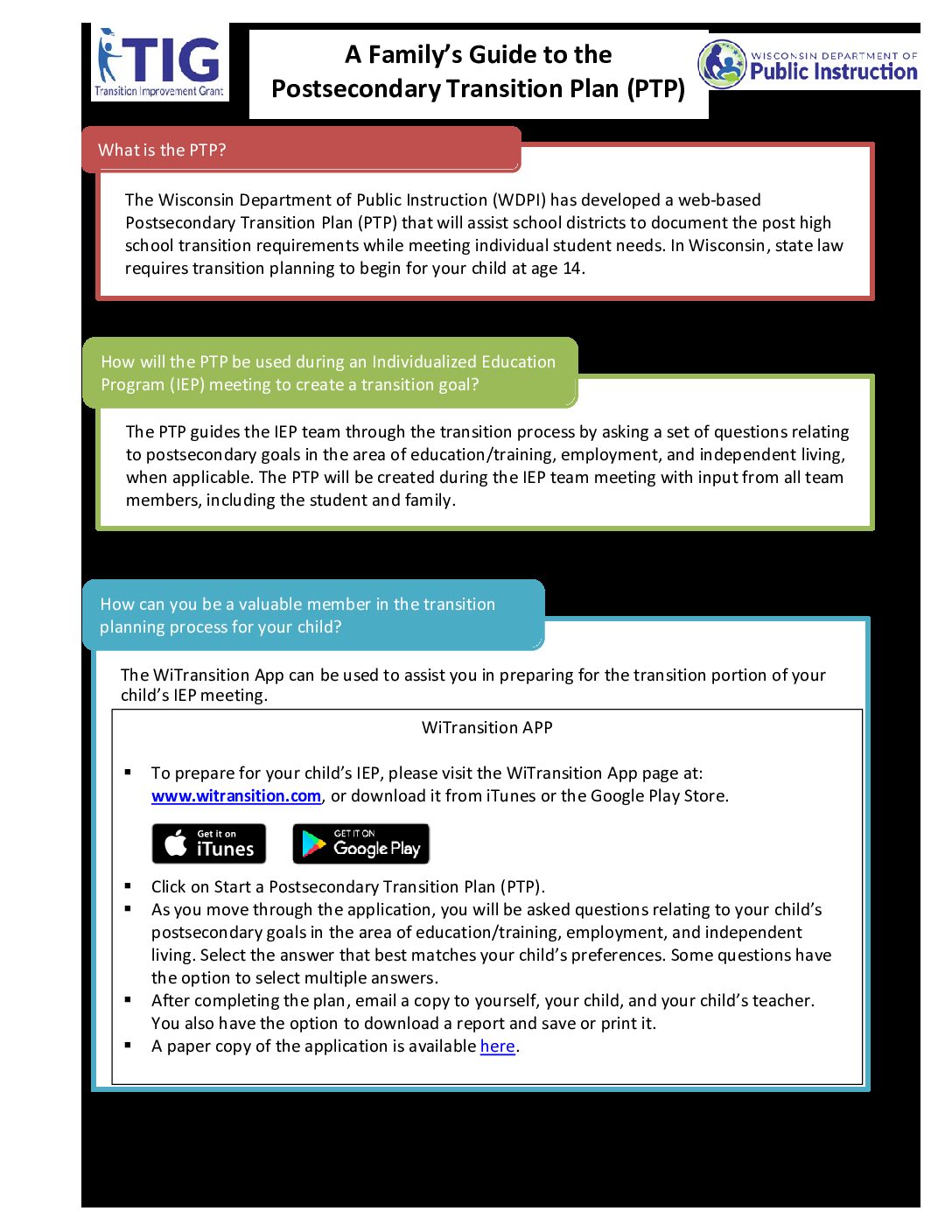
Translated into Spanish, this guide is to inform parents and youth of the new Postsecondary Transition Plan (PTP). It describes the new PTP application, how parents and youth can participate in the new PTP during an IEP team meeting, and gives a list of resources.
A New Way of Thinking
Content Areas Indicator 13 - Postsecondary Transition Plan, Self Advocacy
Resource Type Tool
A New Way of Thinking is a guide for educators and students with disabilities. The purpose of the guide is to assist students to develop self‐accepting attitudes, combat negative thinking, and rediscover themselves.This guide will help students to better understand their disability, think positively about themselves, make choices related to their interests, gain self‐advocacy, and develop self‐determination skills— all of which helps create effective Transition Planning.
A Family’s Guide to the PTP
Content Areas Indicator 13 - Postsecondary Transition Plan
Resource Type Document
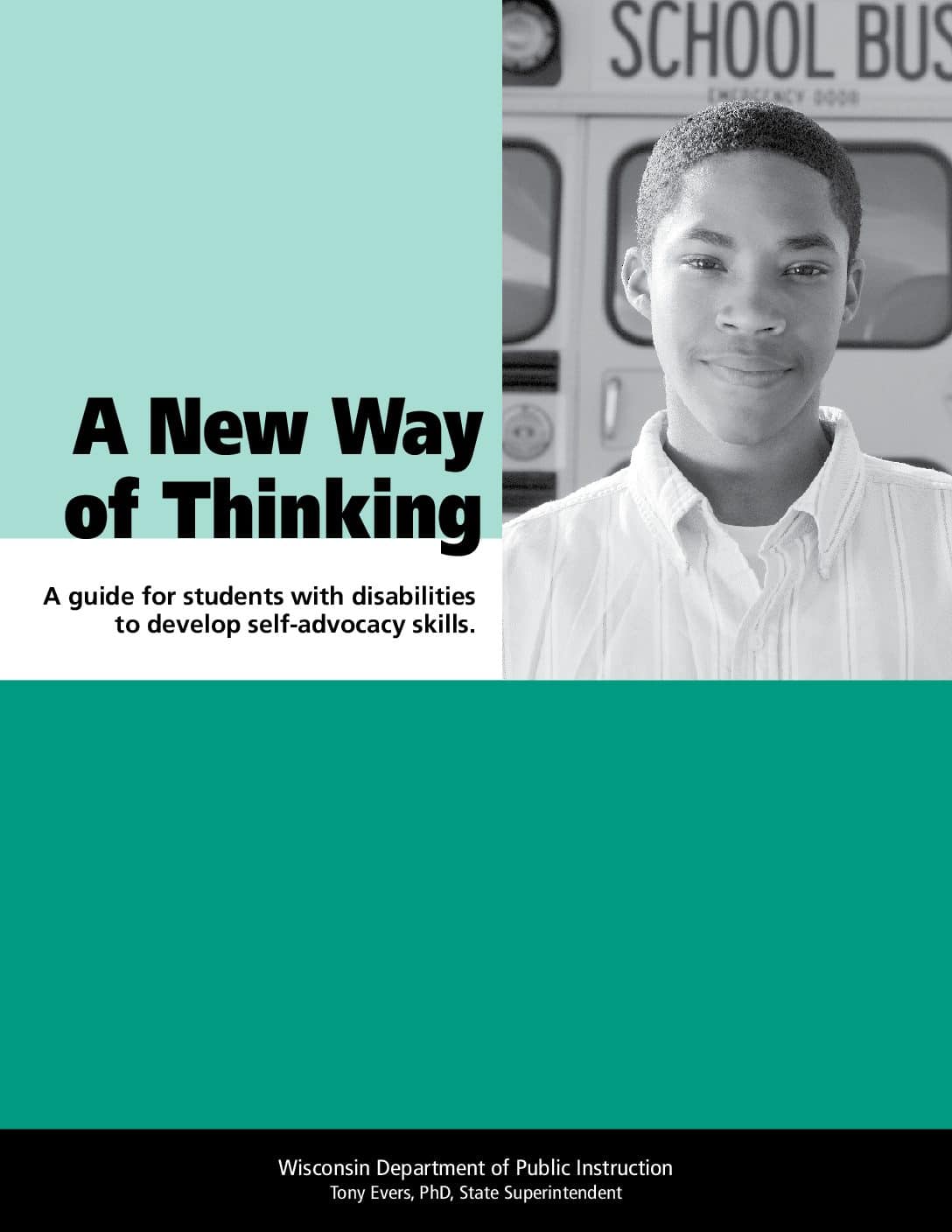
This guide is to inform parents and youth of the new Postsecondary Transition Plan (PTP). It describes the new PTP application, how parents and youth can participate in the new PTP during an IEP team meeting, and gives a list of resources.
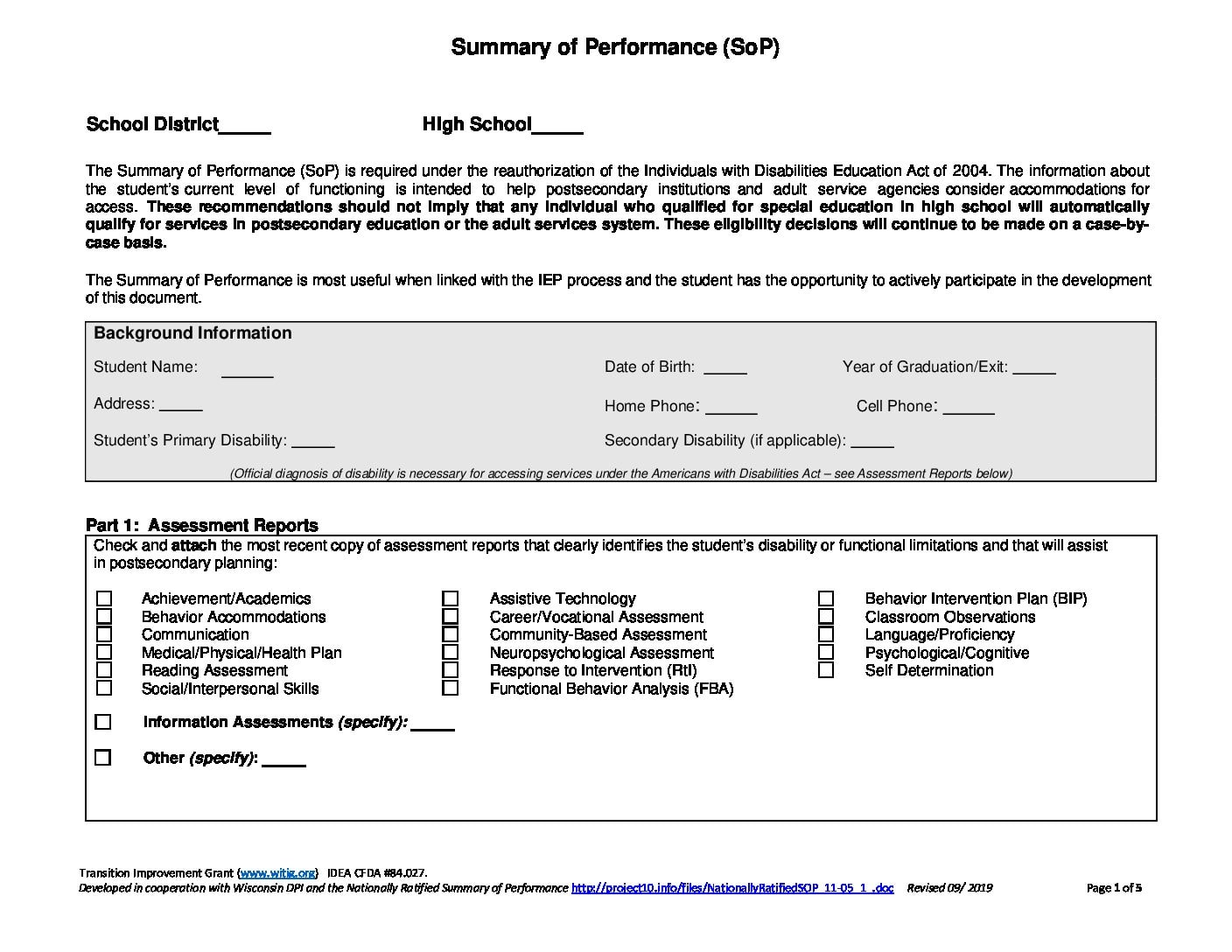
Summary of Performance (SoP) Best Practice Teacher Form – Fillable form
Content Areas Best Practices, Indicator 13 - Postsecondary Transition Plan
Resource Type Document
This is the final copy of the revised WiTIG effective practice SoP form as of 3/24/15.
What You Should Know about Wisconsin Law: Your Legal Rights and Responsibilities
Content Areas Indicator 1 & 2 - Graduation and Dropout Rates, Indicator 13 - Postsecondary Transition Plan, Indicator 14 - Post School Outcomes, Self Advocacy
Resource Type Link
Formerly "On Being 18" publication from the Wisconsin Bar Association, discussing the rights and responsibilities for youth as they turn 18.

Recruiting Students with Disabilities for Youth Apprenticeship
Content Areas Best Practices, Indicator 13 - Postsecondary Transition Plan
Resource Type Document
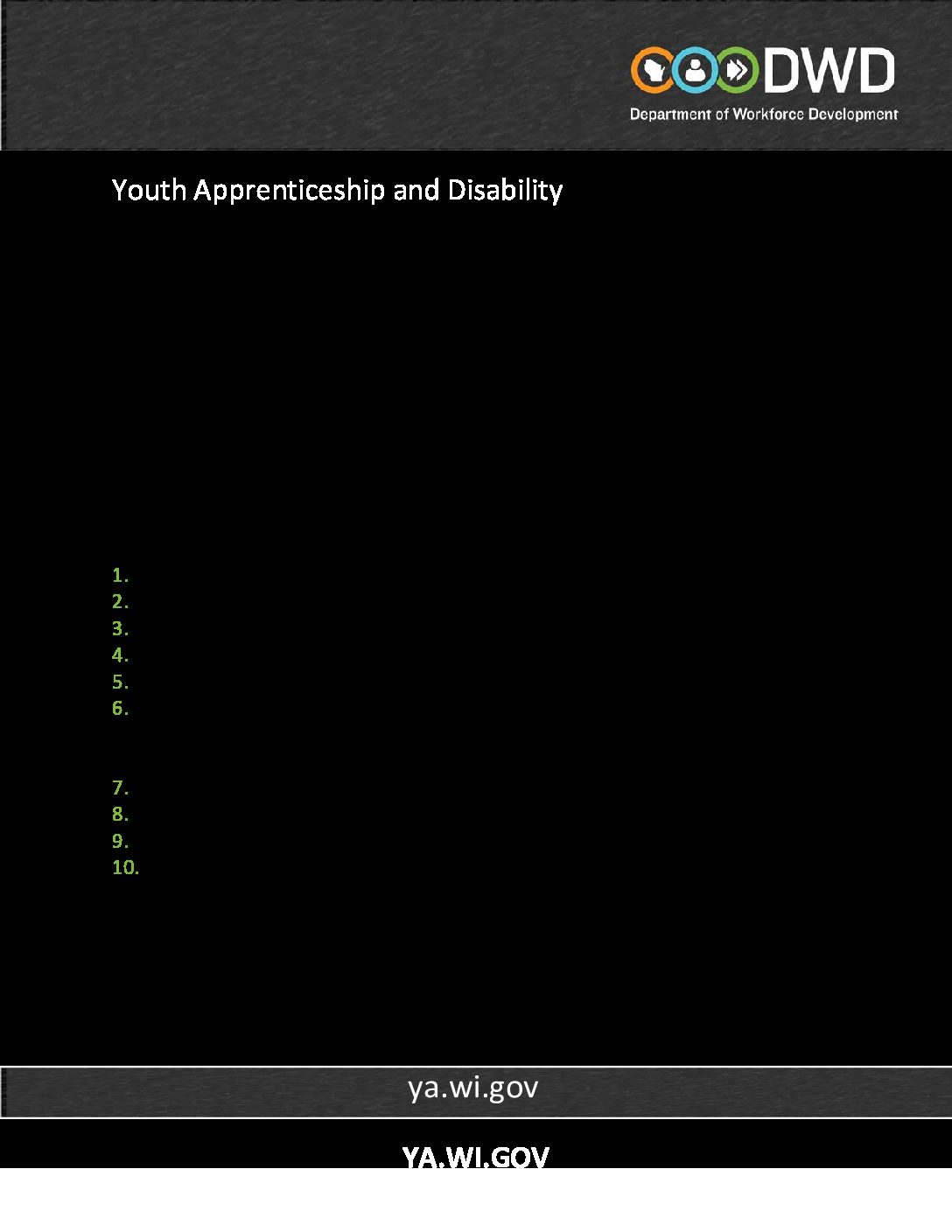
Remembering that there are many students who have disabilities that are qualified and eager to apprentice is a crucial step in growing your consortium and creating a more inclusive Youth Apprenticeship (YA) Program. Students and employees with disabilities account for a large portion of today's, and tomorrow's, workforce. Everyone has the potential to not only improve themselves through YA, but also their respective industries and Wisconsin's economy! Here are a few things you can do to help better engage students with disabilities.
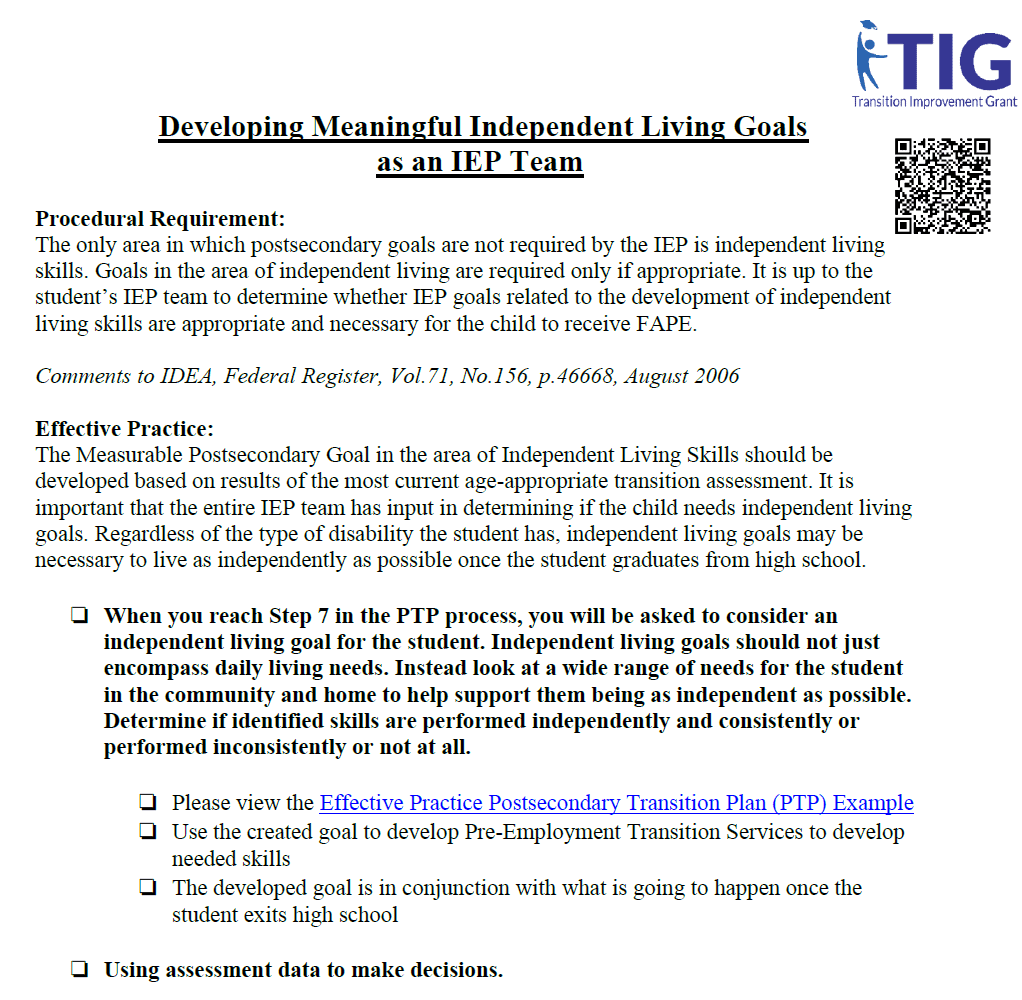
Developing Meaningful Independent Living Goals as an IEP Team
Content Areas Best Practices, Indicator 13 - Postsecondary Transition Plan
Resource Type Document
The Measurable Postsecondary Goal in the area of Independent Living Skills should be developed based on results of the most current age appropriate transition assessment. It is important that the entire IEP team has input in determining if the child needs independent living goals. Regardless of the type of disability the student has, independent living goals may be necessary to live as independently as possible once the student graduates from high school.
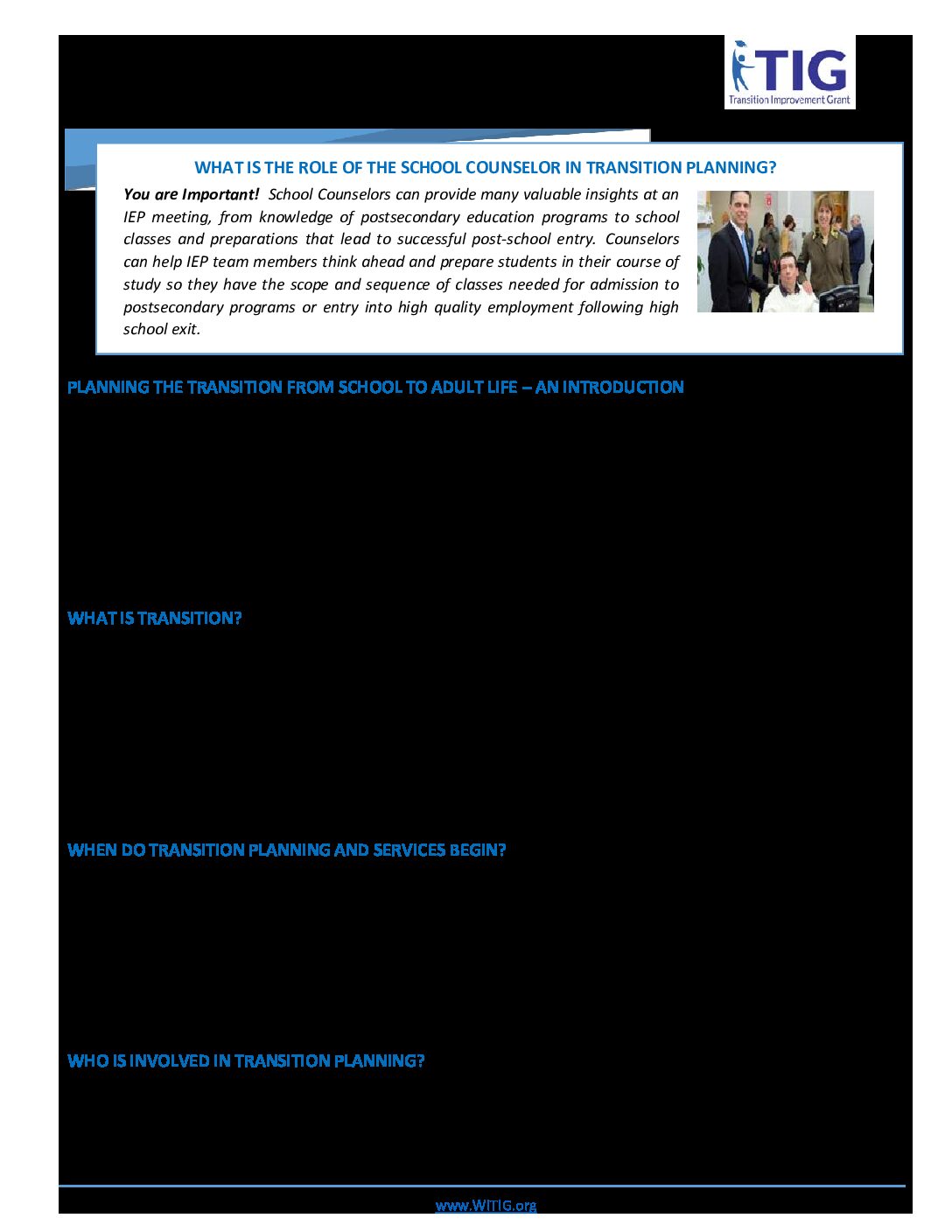
What School Counselors Need to Know about Special Education Transition and IEP Planning
Content Areas Indicator 1 & 2 - Graduation and Dropout Rates, Indicator 13 - Postsecondary Transition Plan, Indicator 14 - Post School Outcomes
Resource Type Document
You are Important! School Counselors can provide many valuable insights at an IEP meeting, from knowledge of postsecondary education programs to school classes and preparations that lead to successful post-school entry. Counselors can help IEP team members think ahead and prepare students in their course of study so they have the scope and sequence of classes needed for admission to postsecondary programs or entry into high quality employment following high school exit.
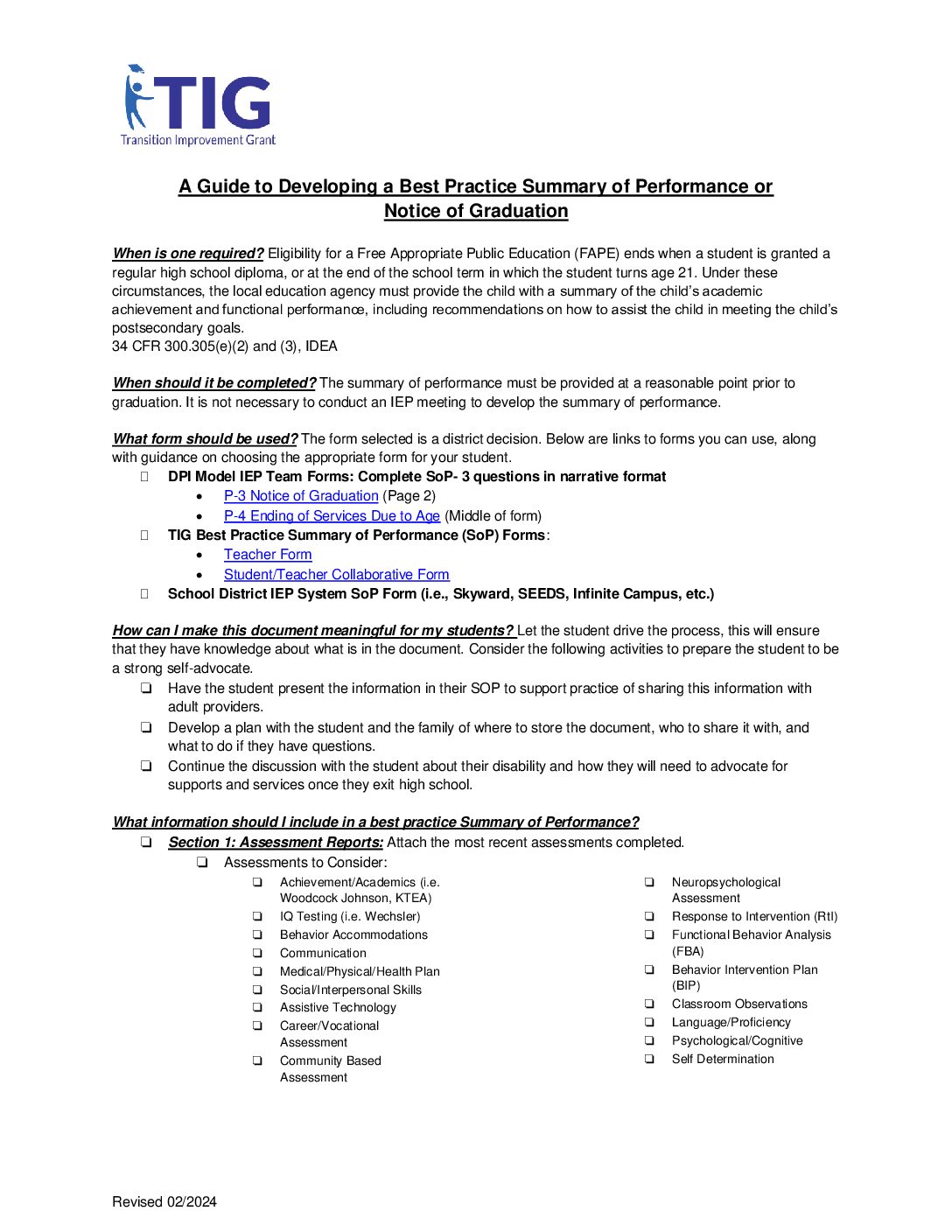
A Guide to Developing a Best Practice Summary of Performance or Notice of Graduation
Content Areas Best Practices, Indicator 13 - Postsecondary Transition Plan
Resource Type Document
This guide outlines the requirements and recommendations for completing the Summary of Performance or Notice of Graduation. The Guide is broken down to match each section in the Summary of Performance.
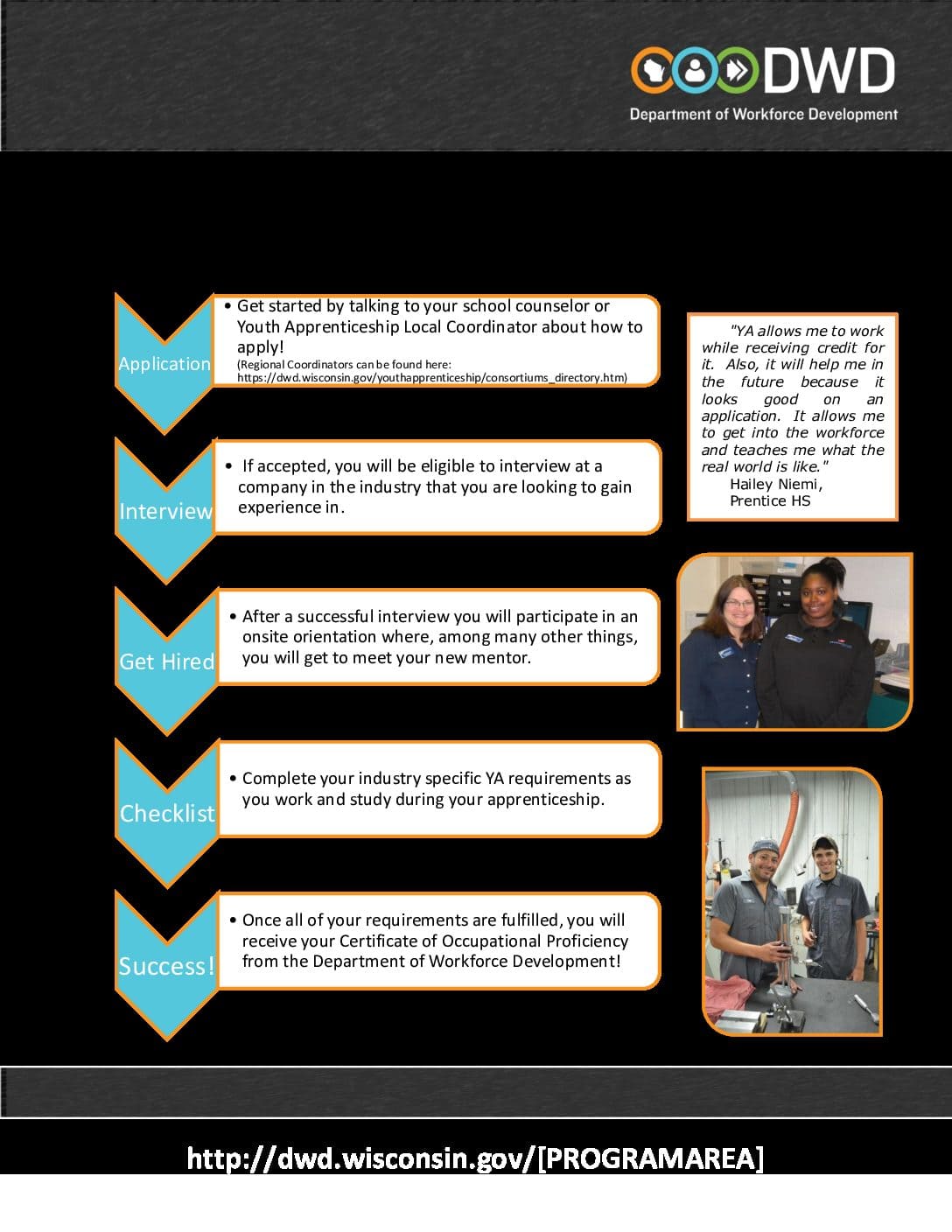
Your 5 Steps in the Youth Apprenticeship Program
Content Areas Indicator 13 - Postsecondary Transition Plan
This document walks you through the five steps to take when considering Youth Apprenticeship. This includes where to begin, the process to take, and completion.
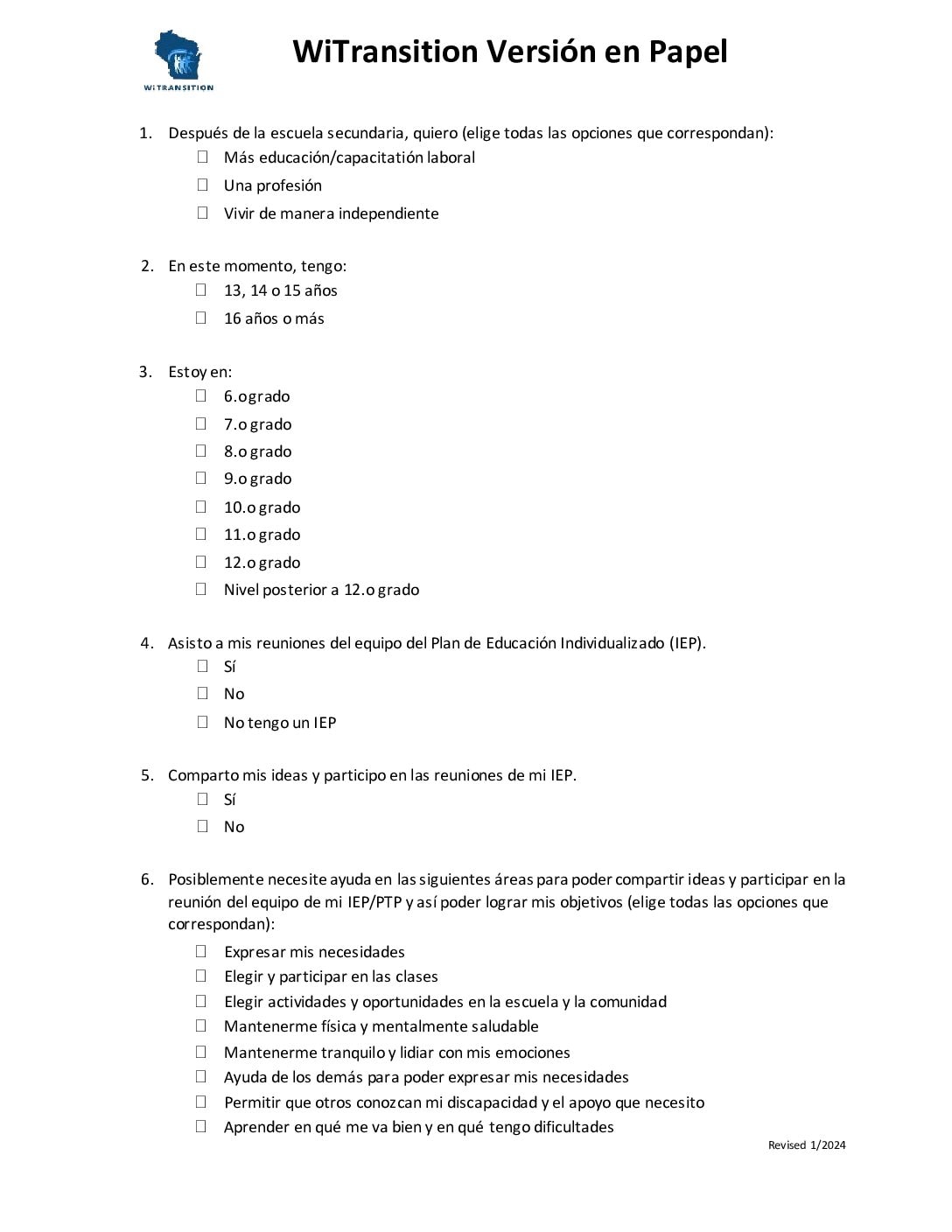
Transición versión en papel – WiTransition App Paper Version – Spanish
Content Areas Best Practices, Indicator 13 - Postsecondary Transition Plan, Self Advocacy
Resource Type Document
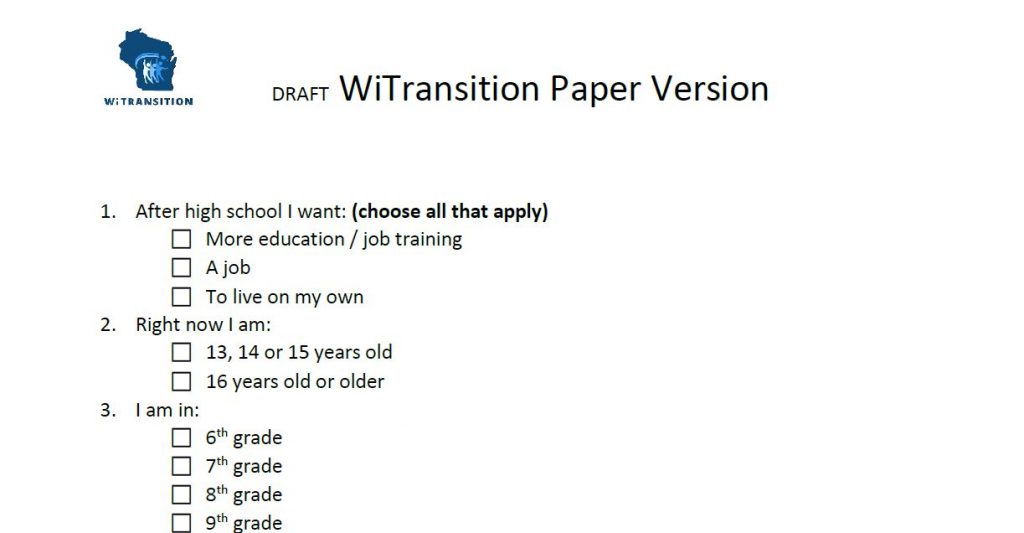
The paper application is intended to be used when technology isn't readily available or for youth to complete ahead of time and input information in one sitting. The application does not save, but a pdf can be generated and emailed to individuals the student chooses.
WiTransition App Paper Version
Content Areas Best Practices, Indicator 13 - Postsecondary Transition Plan, Self Advocacy
Resource Type Document
The paper application is intended to be used when technology isn't readily available or for youth to complete ahead of time and input information in one sitting. The application does not save, but a pdf can be generated and emailed to individuals the student chooses.